News

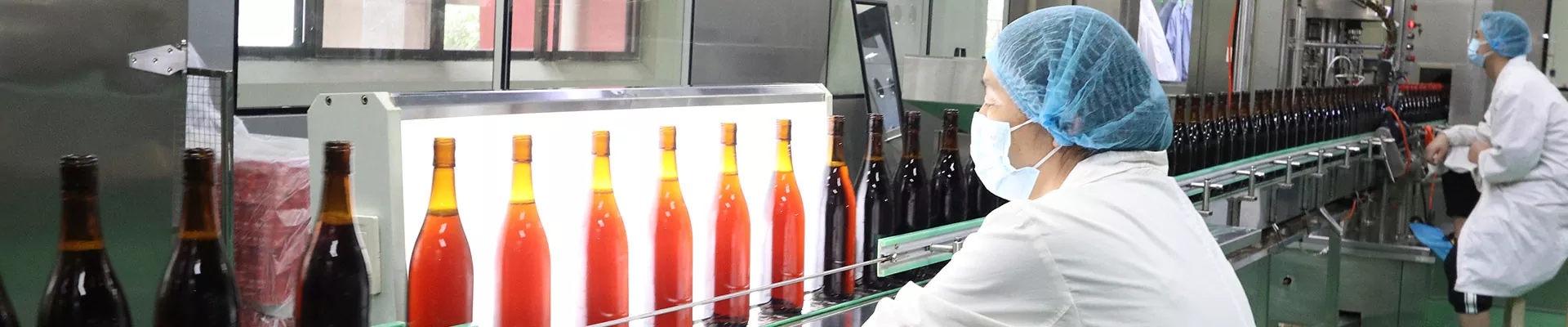
The annual brewing process has regained a new vitality through digitalization and intelligence

2026-01-21 0 Leave me a message

"Grain is the flesh of wine, yeast is the bone of wine, and water is the blood of wine." This ancient brewing adage, passed down for thousands of years, is still regarded as a guiding principle in the present era. In the raw material control workshop, the staff explain that the main grain used in brewing is high-quality sorghum with a tannin content of 1.5%-2.5%, and rice with a direct starch content of 20%-25%. These grains must meet strict standards such as being plump, having a starch content of ≥60%, and being free from mold. The auxiliary material, rice husk, is steamed for 30 minutes to remove pectin and aldehyde substances, and the dosage is precisely controlled at 18%-22% of the grain weight, which not only prevents the mash from becoming compact but also eliminates the interference of bran odors. The water source is selected from weakly acidic soft water with a hardness of 3-8°dH. Calcium and magnesium ions promote enzyme activity, making the wine body more smooth and mellow.

The koji-making process, as the core of the brewing process, carries the key code for microbial transformation. In the intangible traditional koji-making workshop, the inheritors adhere to the traditional temperature control curve of "slow at the beginning - firm in the middle - slow at the end", with the maximum temperature reaching 65°C. They use wheat and peas as raw materials to cultivate big koji, enriching 200 or more functional microorganisms such as spore-forming bacteria and molds, with ester production capacity reaching over 200mg/100ml. At the same time, digital monitoring equipment tracks the temperature and humidity of the koji room and the changes in the microbial community in real time, converting traditional experience into quantifiable data indicators, which improves the stability of the koji block quality by 30% and realizes the precise integration of "old craftsmanship" and "new technology".

Fermentation and distillation are the concentrated manifestations of the "microbial magic" and "art of heat control" in the wine-making process. In the fermentation workshop, the centuries-old pit clusters that have been continuously used can be regarded as "living cultural relics". The anaerobic bacterial communities such as acetobacter and methane oxidizing bacteria in the pit soil have been reproduced and domesticated generation after generation, forming a unique ecological environment. The substances such as ethyl acetate and tetramethylpyrazine produced by their metabolism lay the foundation for the core flavor of the wine. Technicians adopt the traditional method of "cultivating the mash with the cellar and nourishing the cellar with the mash", and at the same time, they monitor the fermentation temperature in real time using underground sensors. For the清香 type liquor, the underground tank fermentation maintains a temperature of 18-22℃, while for the strong aroma type, the stone cellar fermentation follows the precise temperature curve for regulation, ensuring that the microbial metabolism is fully carried out. The distillation process follows the ancient method of "observing the flowers to pick the liquor", collecting the head, middle section, and tail of the liquor separately. The middle section liquor serves as the core base liquor, with an alcohol content controlled at 60-70%vol, and the proportion of ester substances reaches 55%-70%. At the same time, the intelligent steamer barrel is used to regulate the distillation rate, allowing the grain aroma and wine aroma to achieve a perfect fusion.

The aging and blending stages further demonstrate the wisdom of the winemaking process in terms of "time craftsmanship" and "flavor balance". In the pottery tank aging workshop, thousands of pottery tanks are neatly arranged. Their micro-pore oxygen permeability rate of 0.02% - 0.04% per year promotes the oxidation of alcohols and the combination of water molecules, reducing the spiciness of the wine by 30% - 50% and increasing the combination degree from 72% of the new wine to 85% of the aged wine. The digital aging management system establishes an exclusive file for each pottery tank, tracking the cellar storage time, environmental temperature and humidity in real time, and precisely controlling the aging progress. The blending stage breaks the traditional mode of "based on experience and taste", relying on flavoromics technology to analyze the components of the base wine, selecting 3 - 5 batches and 5 - 7 grades of original wine, blending them according to the "rich and mellow, smooth and sweet, refreshing and pure" taste golden triangle, adding 0.1% - 0.3% of aged flavoring wine to fine-tune the acid ester balance, increasing the utilization rate of the base wine by 15% and achieving a batch flavor consistency of over 98%.

"Traditional cultural heritage preservation respects the past but does not adhere rigidly to it. Technological innovation empowers without crossing boundaries." Industry experts stated that the current brewing techniques not only adhere to the essence of the ancient methods passed down in "Qi Min Yao Shu", but also achieve upgrades through the full-chain digital transformation. From raw material traceability to equipment operation and maintenance, from process control to quality inspection, the data-based system enables the brewing process of each drop of wine to be traceable and analyzable. This not only preserves the essence of the thousand-year-old wine aroma but also enhances production efficiency and quality stability. In the future, with the continuous deepening of the integration of industry, academia and research, the brewing techniques will continue to write a new legend of Eastern brewing skills in the collision between tradition and modernity.

Related News
Leave me a message
X
We use cookies to offer you a better browsing experience, analyze site traffic and personalize content. By using this site, you agree to our use of cookies. Privacy Policy
Reject Accept